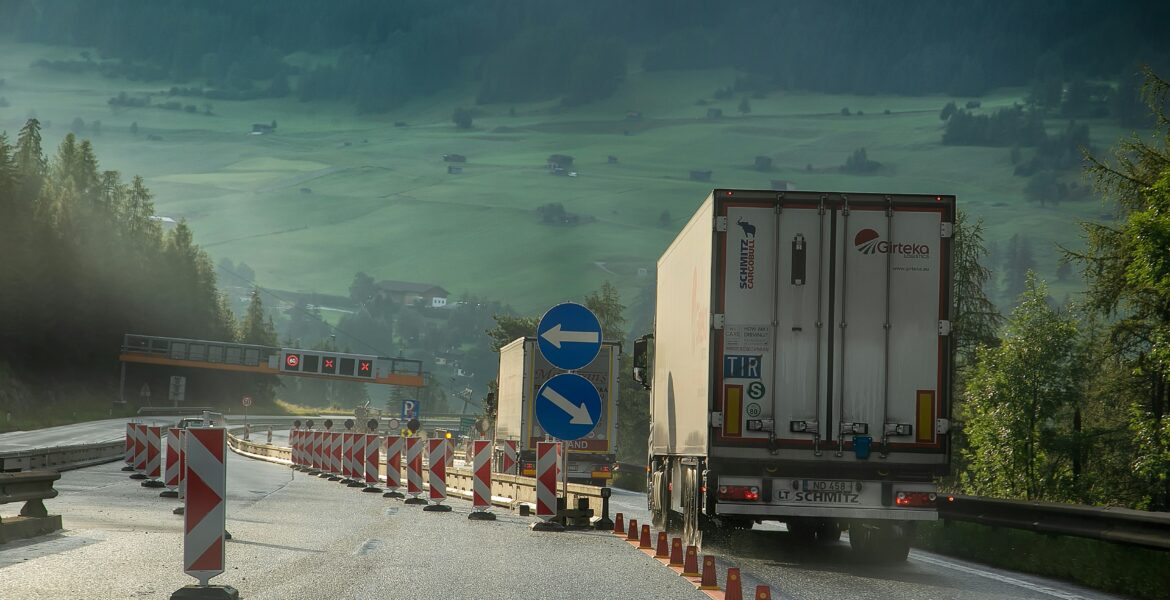
The big players in logistics, driven by the revolution in technology, are now showing the need of some specific parts that are actually essential for working as intended. The autonomous truck safety drivers, AV staffing niche, and driverless pilot support are the essential components of autonomous vehicles . Distinctly as of today, autonomous truck safety drivers are still the trusted drivers assigned to the highway. They are being used by the company along with the other companies that are testing their self-driving long-haul freight trucks. Leddgamp is a company that has dramatically emerged as a leader in autonomous vehicle staffing by launching a new service that helps companies like this one gain more practical knowledge in fieldwork. They facilitate the implementation of the algorithm of autonomous vehicles in the real world. Employing the human supervision of the automated systems, fleets can increase the driver’s trust, ensure the security, and the performance can be optimized.
Market Attitudes and Safety Concerns
Even if fully automated systems are envisioned as functional and normal, the U.S. Department of Transportation forecasts such systems will be the norm a recent JW Surety Bonds survey shows 52% of the professionals in the industry report that they are uncomfortable riding in autonomous trucks. Most of the issues focus on safety, the high prices involved in the initial implementations, and how it will affect the job security of the drivers. Moreover, 43% of the people think that automated trucks will be more dangerous than the currently driven ones, while just 28% of them have the opposite opinion. Although, the survey also says that 46% are in favor and they think that these lanes could be the ones where autonomous vehicles drive, thereby improving the safety on the roads. As cyber attacks are one of the biggest challenges, about 40% of the members mentioned that the vulnerability of the connected systems is a very big obstruction.
Although driving trucks autonomously still seems quite dangerous, it can provide many advantages to the logistics sector in the long run:
- Non-stop productivity: Cars not needing the obligatory rest breaks are able to join the operations in order to enhance the throughput of the whole system.
- Cost-cutting: The drivers of the free vehicles get paid less and the systems operate more economically because the vehicles learn efficient driving patterns.
- Improved logistics: The longer routes that are now more effective free up the driver resources.
Nevertheless, the public’s confidence and the legal system should mature together. This is the place where autonomous truck safety drivers, who act as in-cab supervisors, are significant in securing and spreading the use of advanced technologies.

The Rise of Safety Drivers
Even if the OEMs are announcing the SAE Level 4 and Level 5 modes, fleets are coming to the realization that driverless pilot support is not just a temporary thing but a strategical necessity. The safety drivers set the following example:
- Intervention on the spot: The trained personnel are always ready to take control, should an unusual situation arise.
- Validation of systems: The practical tests with a human reference add to the reliability of the algorithms.
- Recording of incidents: The data from the drivers about events and anomalies are used in feedback loops for continuous improvement.
Leadgamp’s AV staffing niche revolves around the recruitment, training, and deployment of the mentioned professionals. The company autonomous truck safety drivers are put through a comprehensive selection process which ensures that they possess the knowledge about individual vehicle systems, plus the strong risk-management skills.
Defining the AV Staffing Niche
The term AV staffing niche is used to refer to a place in the market where people who work with the autonomous vehicle can easily find each other and work together. Unlike a conventional driver, these employees merge the elements of technical skill and driving further:
- Technological insight: Knowledge of sensor suites, LIDAR, radar, and AI decision-making
- Risk assessment: Evaluating dynamic road conditions, cybersecurity threats, and regulatory constraints
- Communication: Liaising with remote operations centers and maintenance teams
Through the creation of the niche Leadgamp facilitates the absorption of safety measures in the process of driving trucks and guarantees the unified effort exerted by men and machines. Consequently, this promotes the sustainably and confident long-term adoption of the autonomous trucks.

Roles and Responsibilities in Driverless Pilot Support
Safety drivers in line with driverless pilot support are now obliged to do specialist work about the conventional logistics field.
- Pre-trip system checks: Checking the calibration of sensors, software updates, and network connectivity.
- Real-time monitoring: Observing if errors in lane-keeping, obstacle detection, or unexpected pedestrian crossings are occurring.
- Controlled engagement: Hands-on steering while the automatic mode takes color back at the manually required time.
- Data logging and reporting: Performance metrics and incident reports will serve to refine AV algorithms and hardware.
The driverless test-pilot development is stringent with the safety standards because it is the focus of its pilot towns. Our staff is quick at diagnosing both mechanical and software concerns ensuring robust autonomous operations.
Technology Integration and Human Oversight
To have an effective autonomous operation, a perfect blending of advanced technologies and human judgement is provided. The main integrations are as follows:
- Route optimization with AI: The systems manage to choose the safest and most efficient paths at the same time by analyzing data such as congestion, weather, and traffic.
- Dual control systems: Brake and steering if they are repaired in dual increased safety, whereas, the drivers are trained to handle the fallback provisions.
- Cybersecurity firewalls: Through the protection of encryption, intrusion detection, and hacking, the security of the systems is assured, the measure being a top priority according to the JW Surety Bonds survey.
Safety drivers in the AV staffing niche are the on-site folks, the humans that stand in to ensure that the complex systems are working at the risk thought to be acceptable. Leadgamp’s hardware specification and over-the-air software updates are delivered through collaboration with leading tech providers.
Training and Certification
To create a legit AV staffing niche, a training pipeline should be structured. In the Leadgamp curriculum you will get trucking job agency:
- Advanced sensor theory: Getting to know LIDAR, radar, and camera fusion.
- Automated systems diagnostics: Training how to troubleshoot perception and control modules.
- Emergency maneuvers: Practicing roadside hazards and systems failures using scripts.
- Regulatory compliance: Learning the mingling of federal and state regulations that govern the SAE Levels 4 and 5.
The graduates will have the accreditations, common not only among OEMs but also with regulators, that put them in the position of key players in driverless deployments.
Challenges and Solutions
Safety drivers in the autonomous trials have their own specific challenges:
- Vigilance management: Prolonged periods of monitoring traffic can cause fatigue, a trader in the driver space. Leadgamp fights this challenge with shift rotation and ergonomic cab design.
- Faith in Tech: The early movers found the automated switching lacked trust. The experience of mixing professional safety drivers with open communication protocols eradicated these issues.
- The cost factor: Specialized staffing and training are a high-value investment that proves its worth. Studies show that the use of safety drivers decreases the incidents and cuts the insurance premiums which leads to a positive return on investment.
The AV staffing niche, by dealing explicitly with these problems, brings up a balanced approach where the attention of humans is used to enhance the pace of technology development.

Future Outlook
The transportation industry anticipates that autonomous trucks will become the first choice within twenty years. However, over 50% of the stakeholders screed believe the human drivers will never be totally displaced due to the issues regarding job security. The focus has shifted to the procedures of re-establishment, with 86% believing that driving as a traditional job will indeed be adversely affected.
Leadgamp’s entire approach serves as a model:
- Upskilling programs: Retrofitting old drivers to safety-driver and remote operation jobs.
- Hybrid vehicles: A mix of manual and automated cars to smooth capacity transitions.
- Policy advocacy: Aligning with regulators to shape the standards for driverless pilot support and safety driver requirements.
As the pace of change catches hold, the AV staffing niche will also stretch to urban delivery vans, ships, and the final mile logistics.
Finish
Though driving a truck alone might seem exciting and far-reaching, autonomous truck safety drivers and driverless pilot support are very much part of today’s reality. The AV staffing niche is a part of it. It combines technical know-how, stringent training, and live human evaluation. Companies like Leadgamp are front-runners, paving the way by building the scalable models where the safety drivers can be plugged into the fleet of automatic vehicles. It is through this kind of investment in the new workforce segment that fleets can reap the transformative benefits of autonomous trucks, make use of the best safety measures and at the same time keep the public at ease.
Leave a Reply